




What Makes Premium Standard Sand Dredgers the Top Pick for Global River Dredging and Land Reclamation Projects?
Abstract
Global water infrastructure expansion pushes sustainable demand for professional dredging equipment across inland rivers, lakes and nearshore coastal territories, where reliable sand extraction machinery dominates project execution efficiency. This content dissects core performance indicators, certification benchmarks, field application scenarios and customized manufacturing logic of mainstream sand extraction vessels, alongside industry cost optimization solutions verified by decades of real-world construction cases. Detailed comparison between cutter suction variant and conventional dredging units helps international purchasers eliminate procurement pitfalls, while authoritative factory certification standards and global after-sales layout data further clarify why Chinese-manufactured dredging equipment steadily captures rising global market shares in recent decades. One leading industrial equipment type, Sand Dredgers, continues reshaping small-to-large scale land reclamation industry operation standards worldwide.
Table of Contents (Click Each Item to Jump to Corresponding Section)
1. Core Industry Background: Global Dredging Market Growth Drivers & Regional Demand Distribution
2. Fundamental Working Principle & Core Structural Composition of Industrial Sand Extraction Vessels
3. Main Application Fields Spanning Inland Water, Port Engineering and Coastal Land Reclamation
4. ISO9001 & CE Certification Value: Why Standardized Manufacturing Improves Long-term Equipment ROI
7. Global After-sales Support System & Technical Service Standards for Dredging Equipment End-users
9. Authoritative Manufacturer Introduction & Global Procurement Cooperation Guidelines
1. Core Industry Background: Global Dredging Market Growth Drivers & Regional Demand Distribution
Global marine economy and inland water conservancy construction have maintained stable upward growth trajectory over the past decade, directly fueling continuous market expansion for all types of dredging machinery. According to cross-border industrial research statistics published from 2020 to 2025, total global dredging engineering market scale has maintained an average annual growth rate above 5.2%, with Asia-Pacific, Western Europe and North America occupying the top three regional consumption rankings of professional dredging equipment respectively. Multiple core factors jointly drive this lasting market expansion, ranging from accelerated urban waterfront renovation projects, deep-water channel upgrading of international trading ports, government-led river ecological restoration programs to large-scale artificial island construction plans in coastal emerging economies.
● Economic globalization promotes international freight trade expansion: Major coastal nations keep upgrading existing port water depth standards to accommodate oversized container and bulk cargo vessels, which requires periodic underwater silt cleaning and channel deepening via dedicated dredging equipment every 2 to 5 years. Southeast Asian countries such as Indonesia, Vietnam and the Philippines have rolled out multi-year coastal port expansion master plans since 2022, creating sustained bulk order demands for mid-sized dredging vessels from global equipment suppliers.
● Ecological environmental protection policies boost inland river dredging needs: Many European and North American environmental regulatory authorities enforce strict river silt remediation laws to curb water eutrophication, pushing local engineering companies to replace outdated inefficient dredging machines with modern energy-saving models year by year. Meanwhile, developing countries in South Asia and Africa launch large-scale flood control water conservancy projects, generating incremental demand for cost-effective sand extraction machinery suitable for complex shallow inland waters.
● Land resource shortage accelerates offshore reclamation investment: Land scarcity in densely populated coastal metropolises becomes a universal global problem, and land reclamation via hydraulic sand filling turns into a mature solution adopted by governments across Asia and Middle East. These large-scale reclamation projects rely heavily on continuous sand collection and long-distance pipeline transportation realized by specialized dredging vessels, laying solid foundation for stable sales volume growth of relevant industrial machinery.
At this market backdrop, equipment buyers from dozens of countries start shifting procurement focus from high-price European dredging products toward cost-efficient Chinese manufactured units, among which qualified industrial Sand Dredgers earn widespread recognition thanks to balanced performance and competitive wholesale pricing structure. Global procurement data from 2023-2025 indicates over 37% of mid-size dredging project contractors in Southeast Asia prefer Chinese-origin sand extraction equipment for fixed-budget construction tasks.
2. Fundamental Working Principle & Core Structural Composition of Industrial Sand Extraction Vessels
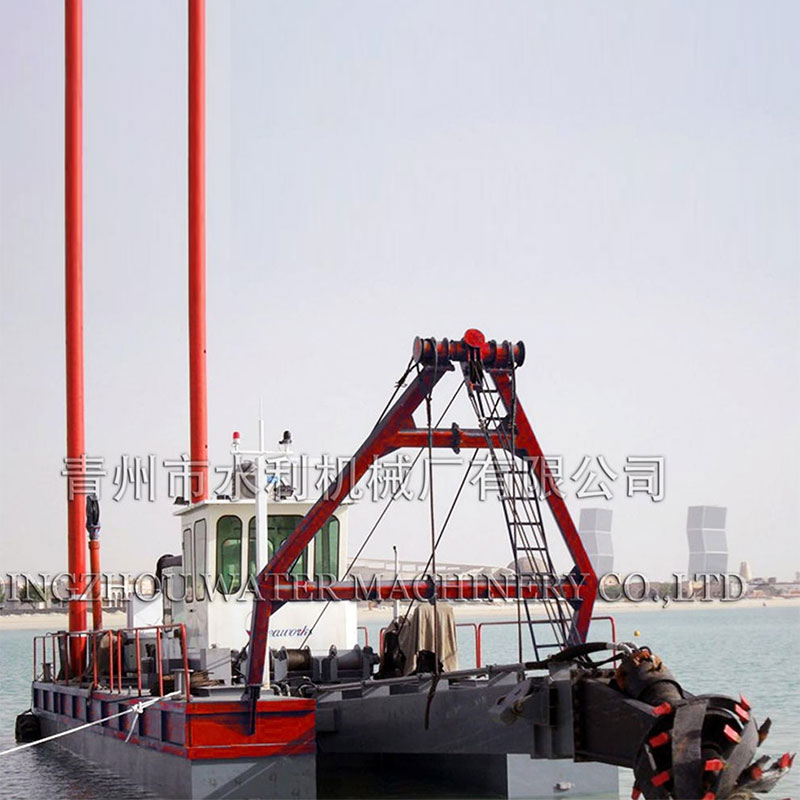
Understanding internal structural layout and core working logic is essential for equipment investors to evaluate actual working efficiency and service lifespan of sand extraction vessels. Unlike land-based digging machinery operating on fixed ground, waterborne dredging equipment needs to balance floating stability, underwater cutting power and long-distance slurry transmission capacity under ever-changing water flow and depth conditions, which puts higher standards on hull manufacturing material and power system configuration.
● Hull main body framework: Qualified industrial dredging hull adopts thick anti-corrosion carbon steel plate processed following national marine industry manufacturing specifications, with reinforced keel structure to resist underwater impact from hidden reef and floating debris during daily operation. Different tonnage specifications correspond to customized hull width and draught design; small-sized inland models feature shallow draught below 1.2 meters to navigate narrow mountain rivers, while offshore adapted versions adopt wider hull design for enhanced anti-wave performance in open coastal waters.
● Core power and slurry pumping system: High-efficiency diesel engine set serves as primary power source driving the whole equipment operation, linking with high-pressure centrifugal mud pump through professional reduction gearbox. The mud pump is the heart component responsible for mixing underwater sand and water into homogeneous slurry and pushing mixed medium through wear-resistant rubber pipeline to designated storage or land filling areas, with customized pump power ranging from dozens of kilowatts for mini river equipment to thousands of kilowatts for large offshore dredging units.
● Underwater cutting accessory configuration: Cutter-equipped variants install rotatable alloy cutter head at pipeline inlet to crush compacted hard sand and soft clay layer before suction, greatly improving working efficiency for geologically complex construction sites; conventional suction-only models omit cutter assembly and directly absorb loose silt and fine sand from riverbed, reducing overall equipment purchase cost for low-difficulty dredging projects.
All core components of standardized dredging equipment go through strict factory load testing before finished product delivery, ensuring continuous non-stop operation for dozens of hours under rated working condition without frequent mechanical breakdown, an important advantage helping premium grade dredging products occupy dominant position in fierce global market competition.
3. Main Application Fields Spanning Inland Water, Port Engineering and Coastal Land Reclamation
Versatile adaptability to diversified working environments is one core competitive edge of mature sand extraction machinery, enabling flexible deployment across three mainstream engineering sectors including inland water regulation, port daily maintenance and coastal artificial land construction. Each application scenario puts forward differentiated parameter requirements on vessel size, maximum digging depth and slurry conveying distance, further promoting manufacturers to develop graded product lines covering mini, medium and large specification models to satisfy segmented market needs.
● Inland river and lake ecological dredging: Municipal environmental departments worldwide deploy mid-small dredging equipment to clear accumulated organic silt at river bottom for improving water quality and restoring aquatic ecosystem, a typical low-depth working scenario usually requiring digging depth ranging from 2 meters to 8 meters and short-distance slurry discharge within 1000 meters. Many domestic water conservancy projects in European countryside and Southeast Asian rural areas choose compact customized dredging units to avoid damaging original river bank vegetation during construction process.
● Harbor channel periodic maintenance dredging: All international trading ports face unavoidable sediment accumulation problem caused by ocean tide and upstream river sand runoff, which gradually reduces navigable water depth and threatens safe passage of incoming cargo ships. Port management teams arrange annual fixed dredging construction cycle to maintain designed channel depth, mostly selecting medium-sized cutter fitted dredging vessels capable of digging down to 15~25 meters and transporting slurry over 3000 meters away from core port area.
● Coastal land reclamation and artificial island construction: Large-scale land expansion projects need massive volume of qualified sand resources transported from offshore sand shoals to target filling zones, which becomes the most high-demand application field for large capacity dredging machinery. Middle Eastern oil-rich nations and Southeast Asian archipelagic countries launch dozens of reclamation projects every year, and well-engineered Sand Dredgers become indispensable core construction equipment supporting these huge infrastructure investment plans.
Real construction cases collected from global project databases prove properly matched dredging equipment can cut overall project construction period by 20%~35% compared with mismatched low-performance alternatives, effectively lowering daily labor and auxiliary vessel rental expenditure for engineering contractors.
4. ISO9001 & CE Certification Value: Why Standardized Manufacturing Improves Long-term Equipment ROI
International authoritative certification serves as essential quality credential for dredging machinery entering cross-border trade market, among which ISO9001 quality management system certification and CE safety certification are two globally recognized compulsory qualification standards for machinery export toward European Union, North America and most developed market territories. Many inexperienced international purchasers ignore certification importance during preliminary procurement phase and end up buying uncertified low-quality equipment suffering frequent breakdown and shortened service life, leading to invisible extra maintenance cost far exceeding initial equipment price savings.
● Core value of ISO9001 certification: This certification restricts whole production flow from raw material procurement, component processing, semi-finished product assembly to finished factory inspection under unified standardized rules, eliminating random cutting corners during production process common in small unregulated workshops. Certified manufacturers implement fixed quality tracking system for every batch of finished dredging products, which facilitates quick spare parts matching and fault diagnosis during later after-sales maintenance stage.
● Practical significance of CE certification: CE mark represents equipment complies with European mechanical safety, environmental emission and electric control safety mandatory regulations, exempting imported machinery from repetitive third-party safety inspection after arriving at EU customs clearance port and shortening overall import customs processing cycle significantly. For contractors undertaking EU government bidding projects, equipment without valid CE certification cannot pass project tender qualification review at all, directly losing access to billions worth of public infrastructure orders.
Professional Chinese dredging equipment factories obtain above dual certifications via long-term standardized production accumulation, making their finished dredging products smoothly access over 60 countries’ import market without complicated extra qualification approval procedures. Calculated based on average 8~12 years of normal service life for qualified dredging vessels, certified products can save around 28% cumulative maintenance expense throughout full service cycle versus non-certified counterparts, generating remarkable long-term return on investment for asset owners.
5. Cutter Suction Variant VS Ordinary Sand Extraction Equipment: Scenario-based Selection Guide for Buyers
Cutter suction subtype is the most mainstream upgraded branch derived from conventional sand extraction vessels, differing notably in applicable soil condition, working depth limit and unit production efficiency compared with basic suction-only dredging models. Making correct model selection according to on-site geological survey report turns into key decision affecting whole project construction cost and progress control, which is a critical knowledge point summarized by thousands of global dredging engineering practitioners after decades of on-site construction experience.
● Core advantages and applicable scenarios of cutter suction dredging vessels: Equipped with high-torque rotary alloy cutter head installed at pipeline inlet, this equipment can break compact hard clay, cemented sand layer and small scattered rock fragments at riverbed before slurry suction, suitable for medium-to-high difficulty dredging sites with complicated bottom geology such as aged silt compacted river channels and rocky nearshore shallow sea areas. Standard medium-size cutter suction model can reach hourly sand extraction capacity between 800 cubic meters to 3600 cubic meters under optimal working condition, widely used in port deepening and large-scale land reclamation engineering across global emerging markets.
● Core advantages and applicable scenarios of ordinary suction-type dredging vessels: Without expensive cutter drive system and alloy cutting assembly, basic suction equipment features lower manufacturing cost, lighter overall hull weight and shallower minimum navigable draught, perfectly matching loose fine sand and soft silt dredging work in plain inland rivers, rural reservoirs and small lake regulation projects. Mini ordinary suction models occupy dominant market share in small municipal environmental improvement projects due to flexible mobility and affordable entry purchase price for medium-small local engineering firms.
Many global project investors consult professional equipment manufacturers to complete pre-purchase site parameter evaluation before finalizing order contract, avoiding wrong model selection mistake which may cause serious construction delay and unexpected extra expenditure on-site. In recent years, customized hybrid design combining partial cutter auxiliary structure and basic suction framework gradually gains market favor for middle-complexity working environments, becoming a new hot-selling product category from top-tier dredging equipment factories worldwide.
6. Customized Production Logic: How Factories Adjust Vessel Parameters for Special Project Conditions
One outstanding industry advantage of leading Chinese dredging machinery manufacturers lies in flexible personalized customized production service, able to adjust dozens of core equipment parameters targeting unique construction environment parameters submitted by global clients, instead of only selling fixed-spec standard finished products off the shelf. Comprehensive customization service covers hull dimension optimization, power system matching, digging depth modification, slurry pipeline distance upgrade and auxiliary function addition such as anti-corrosion coating enhancement and intelligent operation module installation.
● Parameter adjustment based on local hydrological environment: For clients operating in tropical rainy regions with sharp seasonal water level fluctuation, factory technical team shortens original standard hull draught and installs adjustable floating pontoon accessory to guarantee normal navigation under extremely low water level; for nearshore construction sites facing frequent ocean surge impact, manufacturers thicken side hull steel plate and reinforce anchor positioning system to improve whole vessel stability against rough sea condition.
● Performance customization targeting local soil texture: If project geological report indicates construction area is dominated by extra-hard compact sand, factory upgrades cutter head into high-strength wear-resistant alloy material and increases main engine power reserve by 15%~25% to ensure stable daily production output; for ultra-fine silt abundant working zone, technicians optimize mud pump impeller structure to reduce slurry internal flow resistance and promote long-distance conveying efficiency.
● Function expansion according to local environmental laws: Regions with strict waste water emission standards require additional suspended sediment recovery device installed on dredging equipment outlet to prevent secondary water pollution during construction, a customized auxiliary module that professional manufacturers can complete in factory pre-assembly stage before equipment delivery. Thanks to flexible customized manufacturing capability, top-tier factory-produced Sand Dredgers successfully get access to diversified complicated working markets across five continents from frigid northern rivers to equatorial tropical coastal waters.
7. Global After-sales Support System & Technical Service Standards for Dredging Equipment End-users
Complete global after-sales service network becomes core soft competitiveness distinguishing premium dredging equipment suppliers from low-end small workshop manufacturers, directly determining long-term customer repurchase rate and global brand reputation development. Formal qualified dredging machinery suppliers build multi-layer service system covering remote online technical guidance, overseas spare parts warehouse layout and on-site engineer dispatch service for emergency equipment breakdown troubleshooting.
● Remote real-time online technical support: Professional technical teams provide free online video troubleshooting via email and instant communication tools for global end-users within 24 working hours after receiving fault feedback, guiding local operation staff to complete minor component replacement and daily routine maintenance without waiting for on-site engineer arrival, effectively cutting unnecessary equipment downtime loss caused by small mechanical failures.
● Overseas localized spare parts storage layout: Leading manufacturers set up regional spare parts storage warehouses in Southeast Asia, Middle East and East Europe core dredging market countries, storing common wearing spare parts such as mud pump impeller, cutter tooth, rubber pipeline and engine filter, enabling quick local spare parts delivery within 3~7 working days once clients submit replacement demand and drastically shorten waiting cycle versus shipping spare parts directly from Chinese mainland factory.
● Paid on-site engineer dispatch service: For complicated major equipment fault unable to be fixed via remote guidance, suppliers arrange certified field engineers to fly to project construction site to complete full machine inspection, component overhaul and post-repair operation debugging service based on signed service contract terms. Standard service contract clearly defines engineer travel expense standard, working duration limit and post-service quality guarantee period to avoid potential later dispute between both transaction parties.
High-standard after-sales system greatly reduces global buyers’ post-procurement operational risk, which is a critical reason why more international engineering companies gradually shift long-term equipment procurement cooperation toward reputable Chinese dredging machinery manufacturers year after year.
8. Future Development Trend: AI Intelligent Control & Low-carbon Energy Upgrade for Dredging Machinery
Global dredging equipment manufacturing industry steps into critical technological upgrading phase driven by global dual-carbon policy trend and artificial intelligence industrialization wave, with two core development directions including intelligent automatic operation transformation and clean low-carbon power replacement gradually becoming mainstream R&D focus of top global dredging machinery factories in next 5~10 years. These technical innovations will further upgrade overall working efficiency and environmental protection performance of new-generation sand extraction vessels and reshape future global dredging equipment market competition pattern.
● AI intelligent automatic dredging control system popularization: Mature intelligent operation system can realize one-click automatic dredging after pre-setting construction depth, slurry output volume and pipeline conveying parameters, cutting required on-site operator quantity from traditional 3~4 persons per vessel down to single duty staff or even unattended automatic operation under stable hydrological condition. Practical field test data from domestic Chinese large dredging projects verifies AI optimized intelligent equipment improves unit sand extraction efficiency by roughly 10% and reduces comprehensive fuel consumption by about 5% compared with conventional manually controlled counterparts, bringing obvious cost-saving benefit for long-cycle construction projects.
● Low-carbon clean energy power upgrading: New generation large dredging vessels gradually adopt dual-fuel power system supporting both traditional diesel and LNG liquefied natural gas to cut carbon emission index and comply with increasingly strict global marine environmental protection regulations; meanwhile small inland dredging models start pilot test of full-electric drive design powered by shore power or floating photovoltaic power station, eliminating exhaust gas pollution entirely during daily construction operation.
Forward-looking equipment manufacturers allocate fixed annual R&D investment to iterate above new technical solutions, ensuring their newly developed dredging products keep synchronous with global industry top technical level and maintain long-term competitive advantage amid fast-updating market environment. In foreseeable future, intelligent low-carbon Sand Dredgers will replace most outdated high-pollution manual-controlled dredging equipment on global mainstream construction sites.
9. Authoritative Manufacturer Introduction & Global Procurement Cooperation Guidelines
After over 30 years of concentrated industry accumulation in dredging equipment R&D and manufacturing, Qingzhou Water Conservancy Machinery Factory Co.,Ltd. develops into a globally influential specialized manufacturer and wholesale supplier of diversified dredging machinery products covering standard sand extraction units and customized cutter suction variants, owning complete independent production workshop, professional R&D engineer team and standardized finished product testing laboratory compliant with international manufacturing norms. The enterprise’s full product lineup passes ISO9001 international quality management certification and CE EU safety certification, making finished dredging products successfully exported to more than 70 countries across Asia, Africa, Europe and Latin America and widely deployed in various river regulation, port maintenance and land reclamation landmark engineering projects worldwide.
● Core factory strength highlights: The firm realizes full independent control over core component production including hull processing, mud pump casting and power system matching instead of outsourcing critical spare parts from third-party suppliers, effectively controlling finished product quality stability and post-order delivery cycle; its technical department provides free pre-order site parameter evaluation and personalized equipment design scheme drafting service for all global potential clients before formal order signing without extra hidden consulting charge.
● Global cooperation procurement tips: International purchasers can submit detailed project working parameters including construction water depth range, local soil condition, target daily sand output and required slurry transportation distance to the factory’s international sales team for formal customized quotation, with flexible bulk purchase discount policy available for large-scale order exceeding multiple complete vessel sets.
Send Inquiry


X
We use cookies to offer you a better browsing experience, analyze site traffic and personalize content. By using this site, you agree to our use of cookies.
Privacy Policy