




Vertical Radial Extrusion Pipe Making Machine – Practical Selection & Process Guide
1. Overview & Application Positioning
The vertical radial extrusion pipe making machine is currently the mainstream equipment for producing small- to medium-diameter reinforced concrete drainage pipes. Its core operating principle is: using dry-hard concrete, an extrusion head rotates and rises inside the pipe mold, radially compacting the material to achieve instant demolding and vertical curing.
Compared with traditional centrifugal or core-vibration processes, the main advantages of this method are:
-
Short forming cycle (2–4 minutes per pipe)
-
High degree of automation
-
Low labor demand
-
Zero waste discharge
This makes it particularly suitable for high-volume production of drainage pipes in the DN300 to DN1500 mm range.
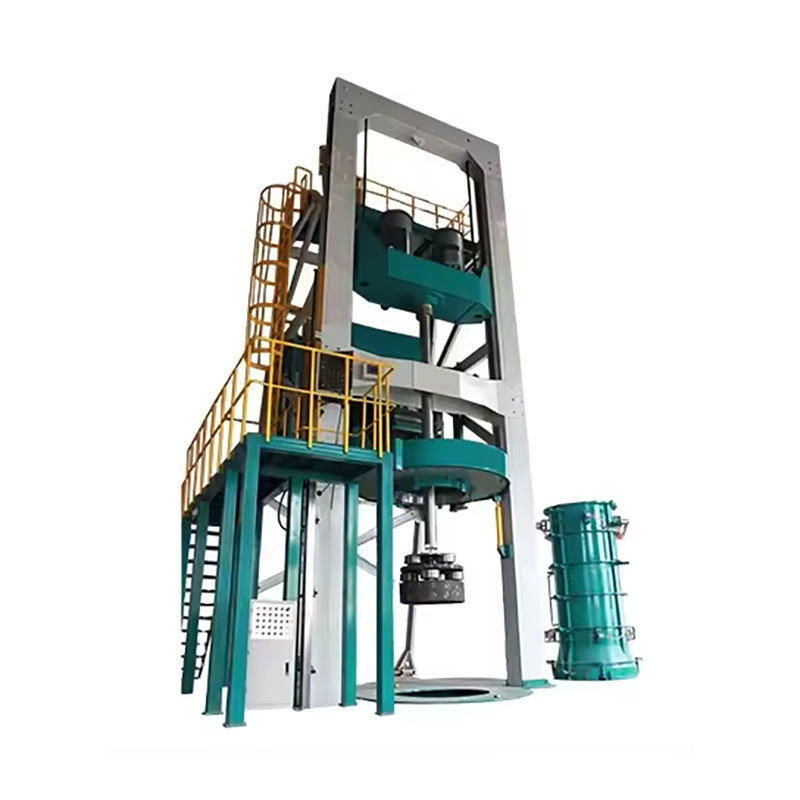
2. Main Machine Models & Key Specifications
When selecting a machine, the following key parameters should be given priority:
2.1 Production Size Range
| Parameter | Common Range |
|---|---|
| Inner diameter range | DN150 – DN1500 mm (mainstream models focus on 300–1200 mm) |
| Pipe length | 2 m, 2.5 m, 3 m |
| Joint types | Plain end, bell-spigot (including flexible rubber ring joint), steel bell, jacking pipe |
Different models cover different diameter ranges. For example:
Small models (e.g., HF series): cover φ200–φ800 mm, total installed power ~11.75 kW, cycle time 5–10 minutes, output 30–100 pipes per shift.
Medium models (e.g., JX800-1650 series): cover 800–1650 mm, total installed power ~143.5 kW, extrusion head speed 30–180 r/min, production rate 30–120 pipes/hour.
2.2 Drive & Control System
Larger machines typically adopt integrated electromechanical-hydraulic control:
Main spindle uses DC or variable-frequency speed regulation, typically 0–150 r/minVertical movement is hydraulically controlled, with working lifting speed of 10–20 mm/s, equipped with encoder tracking for uniform rise
All operational data are fed into a PLC and controlled via a touchscreen HMI (human-machine interface)
2.3 Installation & Environmental Requirements
| Item | Requirement |
|---|---|
| Power supply | 3-phase AC380V/50Hz; installed capacity ~220 kW (for medium lines), dedicated line required |
| Air supply | Compressed air 0.4–0.7 MPa, clean and dry |
| Hydraulic oil | ISO VG 46 anti-wear hydraulic oil |
| Ambient temperature | 5–35°C |
| Relative humidity | 25–80% |
| Control cabinet | Must be placed in a well-ventilated, dry control room |
3. Key Decision Factors for Equipment Selection
3.1 Mold & Extrusion Head Configuration
One significant advantage of the vertical radial extrusion process is the small mold footprint – only one extrusion head and two sets of molds are required per pipe size, greatly reducing initial mold investment.
However, the design and maintenance of the extrusion head directly determine product quality. Domestic and imported extrusion heads differ in mechanical structure, pipe-forming performance, and ease of installation and adjustment. When selecting, users should evaluate based on:
-
Joint type requirements
-
Concrete strength grade targets
-
Surface finish specifications
3.2 Required Supporting Equipment
The main machine alone does not form a complete production line. The following auxiliary equipment is essential:
Automatic cage welding machine (for rebar cage fabrication)Concrete batching plant / mixer
Steam boiler (if steam curing is adopted)
Forklift or other material handling equipment
Some suppliers offer integrated turnkey solutions covering all supporting equipment.
3.3 Common Quality Defects & Process Control Points
In current domestic production, common defects include:
Uneven wall thicknessInner surface scuffing / tearing marks
Insufficient compaction at the bell (socket) end
These are often caused by:
Extrusion head structural design
Mismatch between lifting speed and rotation speed
Improper concrete mix design (water content, gradation, cement content)
Therefore, when selecting a supplier, particular attention should be paid to their technical track record in extrusion head design and process parameter optimization.
4. Industry Trends & Future Development
The industry is moving in three clear directions:
-
Higher production efficiency – faster cycle times and higher output per shift
-
Full automation – reducing manual intervention through PLC-based closed-loop control
-
Multi-size flexibility – rapid mold changeover capability to produce different diameters on a single machine
At the same time, energy efficiency and environmental sustainability are becoming more prominent. Some next-generation equipment now integrates both radial extrusion and core-vibration principles, offering improved compaction density and higher impermeability grades without sacrificing production speed.
Send Inquiry



X
We use cookies to offer you a better browsing experience, analyze site traffic and personalize content. By using this site, you agree to our use of cookies.
Privacy Policy